The Brand With No Social Accounts Already Had Three
A new client's intake form said no social accounts yet. Their exact handle was already registered on Instagram, YouTube and TikTok, all close to empty, owner unknown. Here's the handle check we run before launch now, and what each platform actually says about taken names.
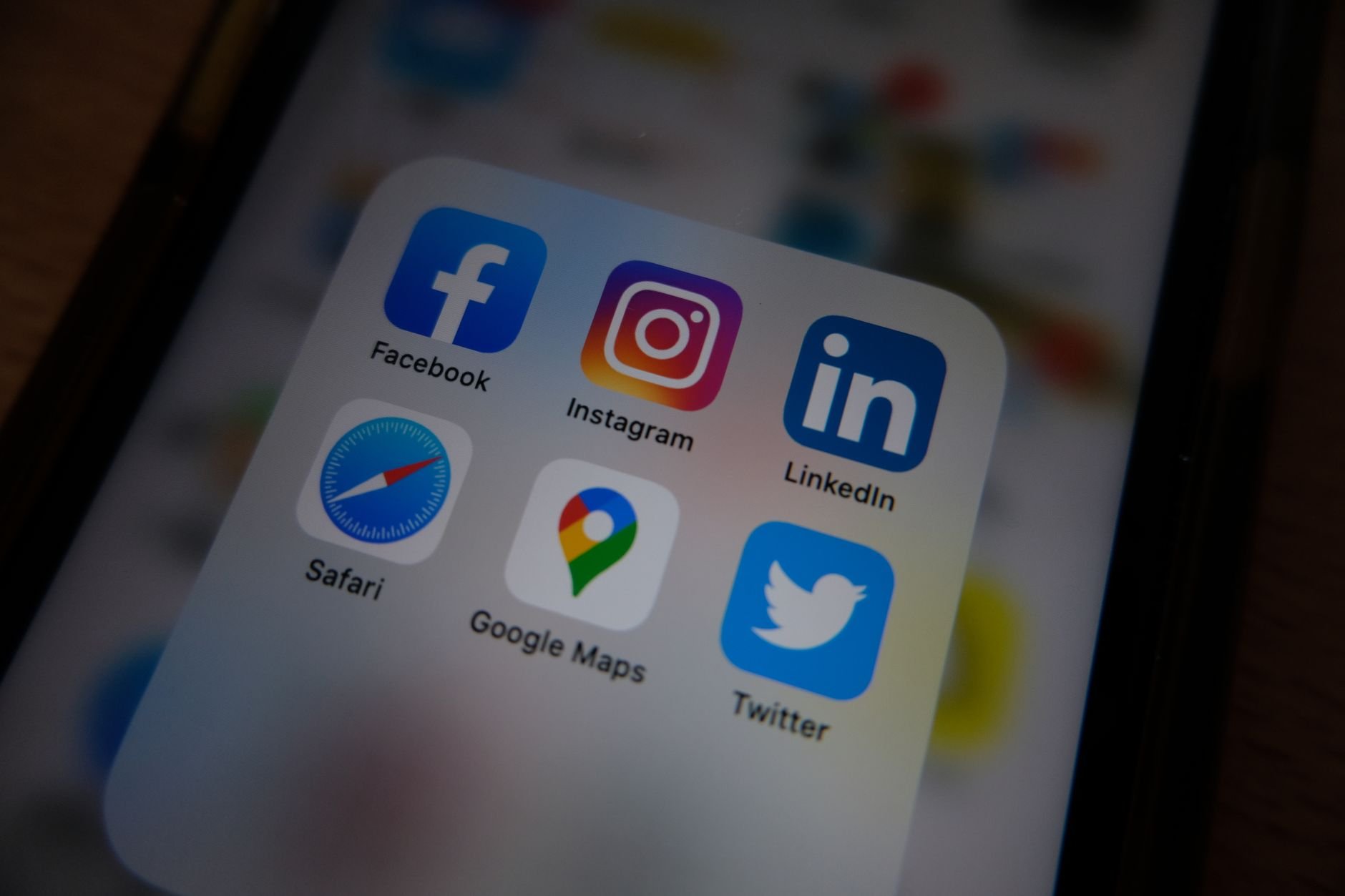
We recently signed a health brand. Their onboarding form asked which platforms they were active on. The answer was “None yet.” The handles field was blank. On the question about adding us to their Meta Business Manager, they picked “I need help.”
That reads like a clean start. So before building anything, we checked. Same day. Their exact brand handle was already registered on Instagram, YouTube and TikTok. All three were close to empty. None of them could be tied to the client with any confidence. And there was no Meta Business Manager at all.
Job one on that account wasn’t a content calendar. It was finding out who owns the name.
What we actually found
The client isn’t named. The findings are exact.
Instagram. The exact handle existed with zero posts and one follower. The bio used three words that also appear in the client’s brand deck. The profile picture was a logo, just not their logo: a different letter mark, different colors, different type. Either an early version of their branding or a completely different business with the same name.
YouTube. A channel under the exact handle, with the brand name as the channel name, a default letter avatar, no banner, no description, no videos. It had been opened almost a year earlier. Nothing tied it to the client except the name.
TikTok. The exact handle belonged to a skincare product account with four videos, all posted on the same day, one follower. Nothing in the client’s product list ruled it out. But the branding matched nothing in their deck.
Facebook and the obvious variation. The Facebook vanity name belonged to a staffing company in another country. The dotted version of the handle on Instagram belonged to a shop in another country. Neither was the client.
Then we widened the search across all four platforms. At least 19 other variations of the name were taken on at least one of them. At least six of the accounts using that root word were in health or wellness, spread across several countries. None of them could be tied to our client.
A name that feels original can already be crowded on every platform that matters. That’s why you check before you print anything.
Why “empty” doesn’t mean “available” or “yours”
An empty account on your exact name usually comes down to one of three things.
1. It’s yours and nobody remembers. A founder, a cofounder, a web designer or an early marketing hire grabbed the name early and never posted. The login lives in someone’s personal email. Best case.
2. It belongs to a different business with the same name. Perfectly legitimate. They got there first. You don’t have a claim just because you want it.
3. Someone is sitting on it.
You can’t tell which one it is by looking. A matching bio isn’t proof. Neither is a matching name. We treated nothing as the client’s until they told us.
How to find out whether an empty account is yours
Before you file anything with a platform, do the boring internal search.
Ask everyone who’s touched the brand. Founders, partners, the web designer, the logo designer, any early freelancer or agency. One question: did you ever register this name anywhere?
Search every inbox for platform emails. Signing up usually triggers a welcome or confirmation email. Search personal and company inboxes, spam and old addresses included.
Try password recovery with the addresses and phone numbers you control. If a recovery code lands in an inbox or on a phone you own, you’ve found your account.
Compare the visuals and the dates. An old version of your logo points inside the company. A logo you’ve never seen, or an account older than the brand name, points outside it.
For our client, we did the outside work and then asked the inside question directly. We sent one email with each of the three accounts linked and a single page PDF showing each profile picture. It asked which accounts were theirs and who held the logins. As of this writing, ownership of all three is still unverified. We haven’t assumed an answer, and the setup plan works either way.
What each platform says about taken names
If you’re hoping to get a taken name back, here’s what the platforms’ own help pages say, as of this month. None of these routes guarantee you get a name back, and we’re not promising they will. Trademark questions belong with an attorney, not a blog post.
Instagram’s help center says that if a username you want is used by an account that seems inactive, you can choose an available version by adding periods, numbers, underscores or abbreviations. That page doesn’t describe a request form for inactive names.
On trademarks, Instagram says usernames are generally claimed on a first come, first served basis and may not be reserved. It says not every use of a trademark in a username is infringement, suggests contacting the account holder directly first, and offers a reporting route if you believe a username infringes your trademark rights.
TikTok
TikTok’s Inactive Account Policy is the most specific of the three. It says an account that hasn’t been used to access TikTok for 180 days or more may have its username reset to a random numeric one. It also says a username may be reset after a valid request, such as a trademark infringement notice.
But TikTok also says whether an account is inactive isn’t publicly visible, so you can’t know from the outside whether that clock has run. And it says that in most instances it can’t reassign a username, and suggests a variation instead.
YouTube
YouTube’s handle page says handles must be 3 to 30 characters, that the sale and transfer of handles isn’t allowed, and that YouTube reserves the right to change, reclaim or remove a handle at any time.
Its trademark page says YouTube doesn’t mediate trademark disputes between creators and trademark owners and strongly encourages contacting the channel owner first. If that doesn’t work, there’s a trademark complaint form. YouTube describes a limited review with removal in clear cases of infringement.
Its impersonation policy covers channels that deceptively copy another entity’s branding, content or usernames, and says a channel established to impersonate someone may be removed. That’s for a channel pretending to be you, not a different business that shares your name.
Read those three together and the pattern is obvious. Every platform’s default answer to “someone has my name” is “pick a variation.” The formal routes are for trademark and impersonation problems, and none of them are certain. Plan your launch around the handle you can register today.
Set up Meta ownership so the business owns the business
The missing Business Manager was the second half of the problem, and it’s the one to get right before anything else gets built.
Meta now calls it a business portfolio: one place to manage an organization’s Facebook Pages, Instagram accounts and ad accounts. From Meta’s own setup pages:
- The portfolio name should match the public name of the business, because it’s visible across Meta.
- A person can personally create up to 2 business portfolios.
- A business asset can only belong to 1 business portfolio.
- An agency is added as a partner, either by giving the partner access to your assets or by asking the partner to share assets with you.
That third line is the one that bites. If a freelancer or an agency creates the Page or connects the Instagram account inside their portfolio, that asset lives there. When the relationship ends, you’re asking someone else to hand back your brand.
The rule we work by: the business creates and owns the portfolio, and the agency works inside it as a partner. The client holds the keys. We don’t need to own anything to do the work.
Meta’s security best practices page adds a few settings worth doing on day one:
- It recommends (not requires) that 2 active people have full control of the portfolio, so one locked account doesn’t lock the business out.
- It recommends removing users with public email domains that aren’t related to the business, and users without passkeys or two factor authentication.
We asked our client for one thing that makes all of this cleaner: an email address the business controls to register every account under, ideally a shared company inbox. Every account then lives under the company’s own address, and verification codes don’t depend on one person’s phone.
The handle checklist to run before launch
Run this before a brand name is final. Not after the logo is on the signage.
- Check the exact name on every platform you’ll use, plus the ones you won’t use yet. Instagram, TikTok, YouTube and Facebook at minimum.
- Check the obvious variations too. Dotted, underscored, with “official,” with your city, with “health,” “co” or “usa.” Squatters and lookalike brands live on the variations.
- Don’t trust a quick lookup alone. In our testing, simple profile lookups were unreliable on some platforms. The platform’s own signup screen is a stronger check, and sometimes only registering confirms it.
- Screenshot and date everything you find. Profile picture, bio, follower count, post dates.
- Run the internal search on any taken handle before you assume it belongs to someone else.
- Pick one handle that’s free everywhere and register it on every platform the same day. Names in a crowded space go fast.
- Register under a company email the business controls, never a personal address or a contractor’s.
- Create the Meta business portfolio under the business, add two people with full control, and add any agency as a partner.
Pick a fallback pattern you can repeat
If the exact name is gone, don’t solve it platform by platform, or you end up with three different names on three platforms.
Pick one pattern and use it everywhere. For our client we found fallback names that showed as open on all four platforms at once: 11 options for the main account and 6 for a local account.
The patterns that hold up:
- Brand plus category: brand name plus health, clinic, wellness or co.
- Brand plus country: brand name plus usa, useful when the business actually serves the whole country.
- Brand plus place: brand name plus the city or county, for a local account that runs alongside a national one.
- Brand plus official: fine as a handle, but don’t lean on “official” in a channel name to look more authentic than another account. YouTube’s impersonation policy lists putting “Real” or “Official” into a channel name to pretend to be another person’s authentic channel as an example of what’s not allowed.
Skip random numbers and stacked underscores. They look like a copycat account.
What this doesn’t mean
It doesn’t mean you should panic about every account that shares your name. Another business with the same word in a different field and a different country isn’t a problem you need to fix.
It means an intake form tells you what the client knows, not what exists. Nobody on that team was wrong. As far as they knew, they hadn’t launched social yet.
Our social media management service page covers how we set up and run accounts from day one, and if you’re naming or renaming a brand, a branding and design project should start with a check like this one. Want a read on where your brand stands right now? Run a free audit. If a site is part of your launch, we’ve also written about the contact button nobody tests, which is the website version of the same lesson.
FAQ
Can I get an Instagram username from an inactive account?
Instagram’s help center advises choosing an available variation instead. It offers a reporting route if a username infringes your trademark, and notes that not every use of a trademark in a username is infringement.
Does TikTok release inactive usernames?
TikTok says a username may be reset after 180 days or more of inactivity, or after a valid request such as a trademark notice. It also says in most instances it can’t reassign a username to you.
Can I buy a YouTube handle from the person who has it?
No. YouTube’s handle guidelines say the sale and transfer of handles isn’t allowed.
Who should own our Meta business portfolio, us or our agency?
The business. A business asset can only belong to one portfolio, so the business should own it and add the agency as a partner.
What should we do if an empty account on our name might be ours?
Ask everyone who’s worked on the brand, search inboxes for confirmation emails and try password recovery. Don’t treat any account as yours until someone can actually log in.
Check the name before you fall in love with it
The client in this story did a lot right. They built a brand deck, chose a name and hired help before posting a word. The step nobody tells founders to take is looking up the name on every platform before it goes on anything permanent.
A handle check before launch is cheap. Forms after launch aren’t.
Want a second opinion on a campaign that isn’t working? Book a 15-minute call. No deck, no fluff. Strategy first. Tactics second. The work works.
Reliable PR & Marketing is a strategy-first marketing agency in Bakersfield, California. We run integrated SEO, PR, web, and content for founder-led companies across Kern County and nationwide. Strategy first. Execution always.